What Is the Difference between a Yellow-billed Hornbill and a Red-billed hornbill?
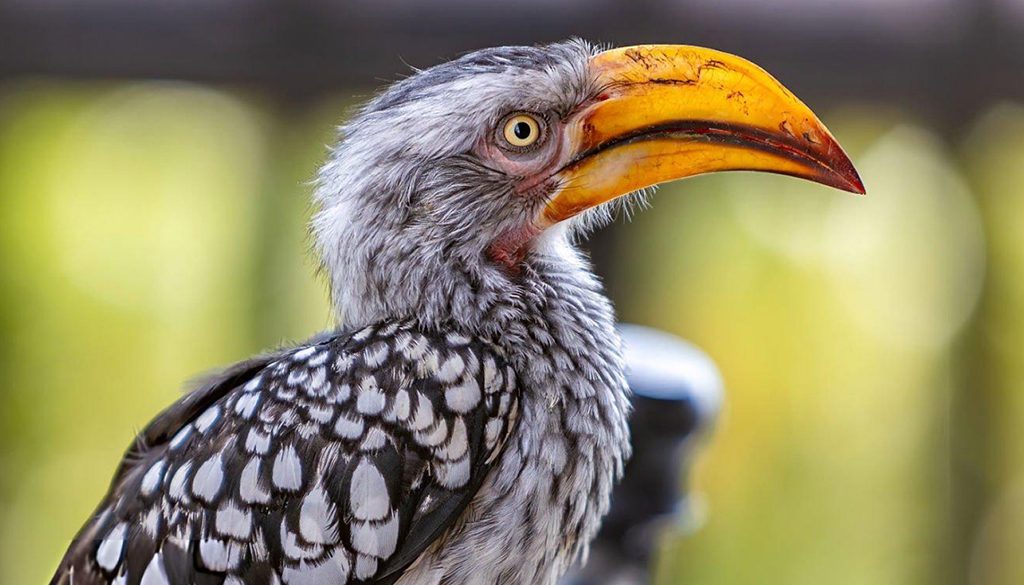
What is the actual difference between a yellow-billed hornbill and a red-billed hornbill? The most immediate answer to telling them apart is, naturally, the color of their massive bill. The southern yellow-billed hornbill sports a bright, banana-yellow beak so long and curved that bird enthusiasts have affectionately dubbed the species the “flying banana”. This bill can account for up to one-sixth of the bird’s total body length. Yet, despite its imposing look, it isn’t heavy at all. It’s constructed from a hollow honeycomb of light bony struts covered in keratin, making it a delicate yet remarkably precise tool.
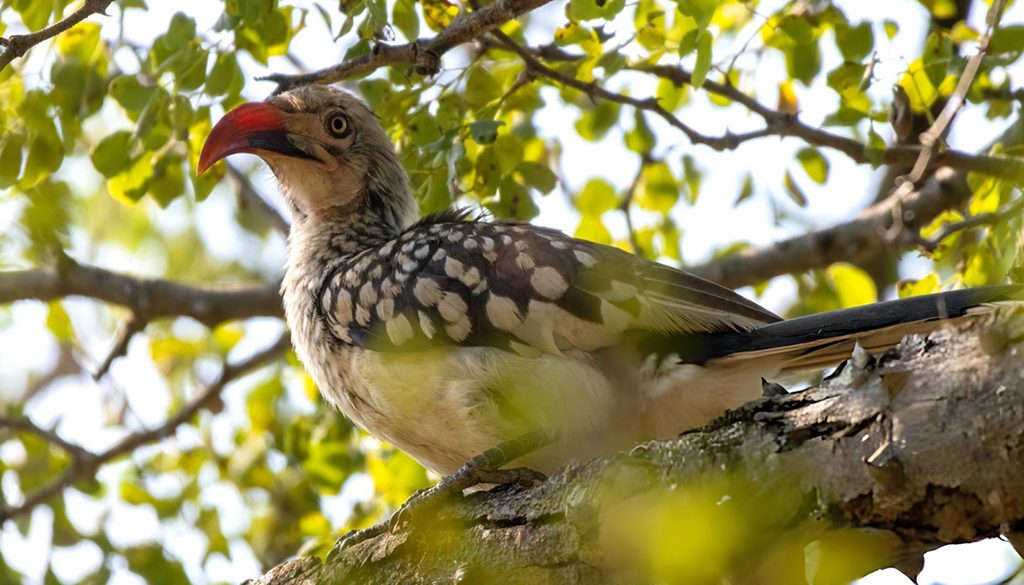
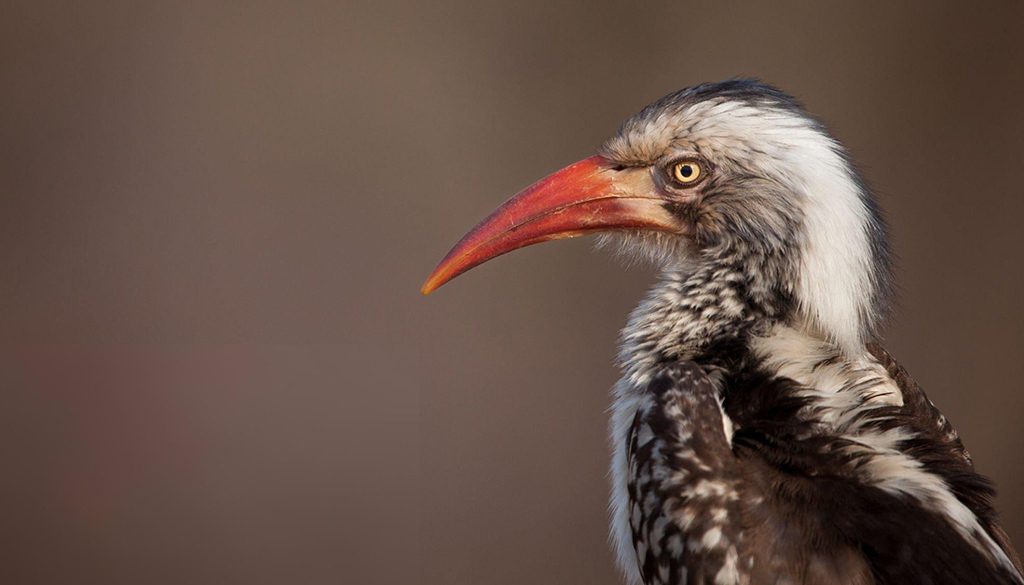
On the other hand, the red-billed hornbill—which actually encompasses a few closely related species like the southern and northern red-billed hornbill—boasts a striking, fiery red to orange-red bill that creates a sharp, eye-catching contrast against its pale gray face and neck.
Distinctive Physical Characteristics and Beak Architecture
If you look closely at the architecture of the beak, another physical clue emerges. The yellow-billed hornbill’s casque is a modest, flattened ridge that runs along the top of the upper bill, particularly pronounced in males.
The red-billed hornbill, by comparison, lacks a prominent casque entirely, giving its bill a smoother, sleeker, and slightly more delicate contour from base to tip. In terms of overall body scale, the yellow-billed hornbill is subtly larger, heavier, and broader-shouldered than its red-billed counterpart, which carries a distinctly slimmer, lighter build. Spotting these physical traits quickly highlights the main difference between a yellow-billed and red-billed hornbill in the wild.
Behavioral Traits and Mongoose Partnerships
Beyond their physical appearance, these two hornbill species reveal fascinating differences in how they navigate their daily lives in the African bush. Both species are primarily ground foragers, spend hours pacing through leaf litter, and use their forceps-like bills to flip over pebbles, animal dung, and twigs in search of beetles, termites, scorpions, and small lizards.
However, the yellow-billed hornbill is famous for taking foraging to a whole new level through an extraordinary interspecies friendship.
In one of the most celebrated cooperative relationships in nature, the yellow-billed hornbill forms hunting alliances with groups of dwarf mongooses. When a mongoose pack emerges from its termite-mound den to hunt, yellow-billed hornbills will often land nearby and wait. As the mongooses scurry through the grass, they flush out grasshoppers, crickets, and spiders directly into the path of the waiting hornbill. In exchange, the hornbill acts as a sentry. Sitting high on an elevated perch, the bird keeps a sharp eye on the sky for birds of prey. If a hawk or eagle swoops in, the hornbill sounds a loud alarm call, warning the mongooses to dash for cover. Studies show that dwarf mongooses will actually delay their morning foraging if their yellow-billed hornbill partners haven’t arrived yet.
Red-billed hornbills, while occasionally opportunistic around other animals, do not rely on this formal, highly synchronized partnership in the same dedicated way. This distinct social behavior forms another clear difference between a yellow-billed and red-billed hornbill.
Distinct Vocalizations Across the Savanna
Their voices also tell different stories across the savanna air. Hornbills are notoriously vocal, but their calls tell two completely different stories. The yellow-billed hornbill is famous for its theatrical performance. When it decides to call, it does not just make a sound; it puts on an entire show. It bows its head down toward its feet, fans its wings out wide, and produces a rhythmic, low-pitched clucking sound that starts slowly and accelerates into a loud, booming sound. It sounds almost like an engine trying to turn over in the bush.
The red-billed hornbill, by contrast, relies on a somewhat higher-pitched, repetitive clucking sound that builds in speed and volume, often sounding like an urgent, chatter-like alarm call echoing across the scrubland. If you hear a deep, rhythmic, mechanical chuffing that sounds like a mechanical clock ticking faster and faster, you are listening to a yellow-billed hornbill marking its territory.
Geographic Range and Habitat Preferences
When it comes to where you can spot them, their geographic ranges overlap significantly. Yellow-billed hornbills are largely concentrated in the dry savannas and arid scrublands of southern Africa. Red-billed hornbills, as a broader species complex, have a much wider distribution that extends beyond southern Africa up into the dry belt of sub-Saharan Africa, stretching all the way across East Africa to the Horn of Africa.
So, the next time you find yourself scanning the sunlit branches of an African woodland and spot an intriguing bird with a massive curved beak, look beyond the initial charm of its silhouette. Check the color gleaming in the sunlight. If it is bright yellow with a subtle ridge on top, you are looking at the famous “flying banana.” If it is a deep, fiery red with a smooth profile, you are watching the swift, agile red-billed hornbill pacing the dry earth. Knowing the key difference between a yellow-billed and red-billed hornbill helps you appreciate two fascinating characters of the savanna, each perfectly adapted to turn the dry bush into a thriving, colorful home.
Help Me Plan My Trip
GET IN TOUCH
To contact an expert travel planner to start planning your adventure in Kenya, click the button below: