What Bird is Called the Jesus bird?
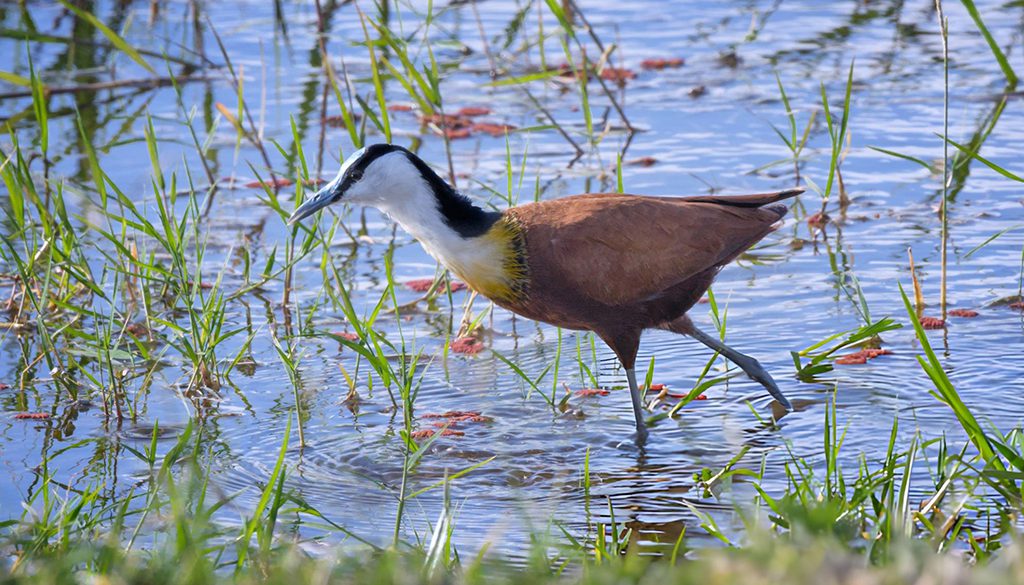
Which bird is famous for earning the holy moniker of the “Jesus bird“? The answer is the jacana, and most notably, the striking African Jacana. If you have ever caught a glimpse of this vibrant wetland wader gliding effortlessly across the deep blue waters of a tropical lagoon, it is remarkably easy to see why the name stuck. To the naked eye, the African Jacana seems to pull off an impossible trick—it strides comfortably over open water, completely defying gravity and stepping lightly across the aquatic surface as though the liquid beneath its feet were as solid as a paved city street. It doesn’t sink, and it doesn’t swim; it simply walks across the watery abyss with unmatched grace and calm.
1. The Secrets Behind Walking on Water
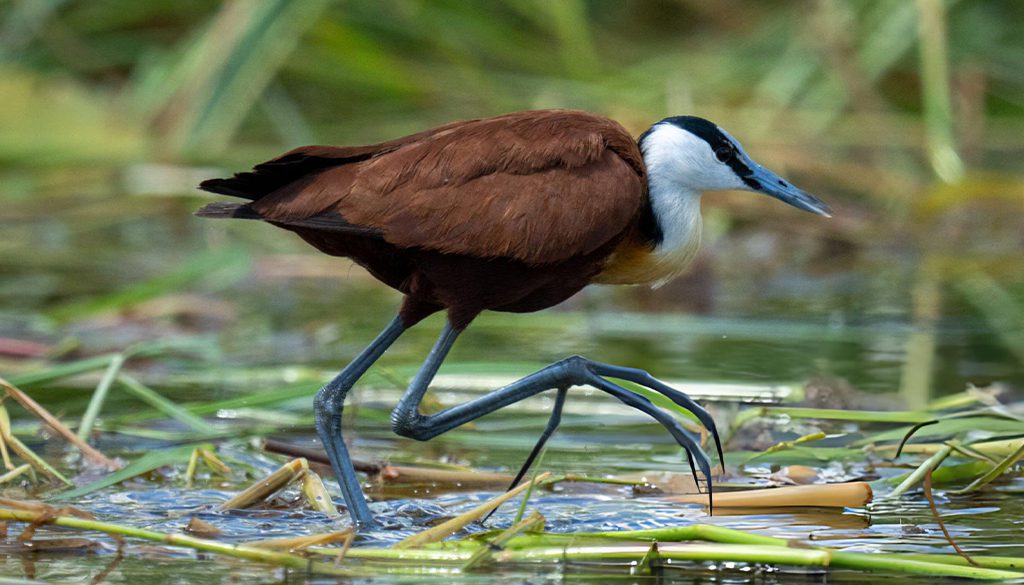
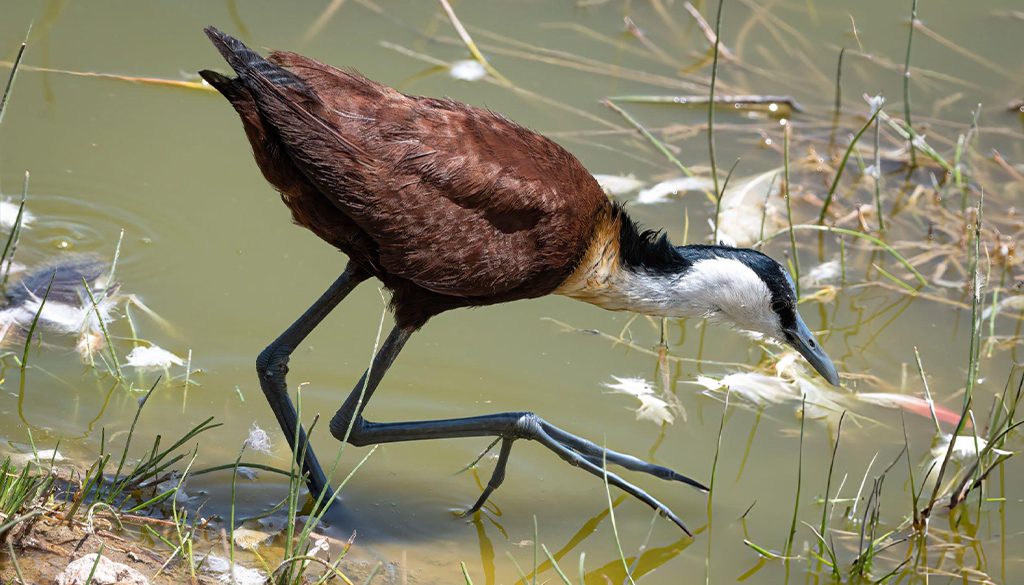
While locals across the sub-Saharan African continent frequently call them lily-trotters, the holy title of “Jesus bird” is what continues to capture the human imagination. The secret behind this apparent miracle, however, is not supernatural, but rather a masterclass in natural selection and anatomical engineering. Relative to its light, chestnut-colored body, the African Jacana possesses what are proportionally the largest feet of almost any bird on Earth. Its toes and long, slender claws spread out over an astonishingly wide area.
When this nimble wader steps onto a delicate bed of floating vegetation or water lily pads, those massive, spider-like feet spread its light body weight across a vast surface area. By effectively spreading its weight, the bird prevents the fragile green leaves beneath it from submerging. Because the floating plant pads are often submerged just a fraction of an inch under the surface or hidden from an observer’s view on the riverbank, it creates a breathtaking optical illusion, making it look as though the bird is stepping seamlessly on top of the water itself.
2. Striking Appearance and Wetland Habitat
Adorned with chestnut plumage, a dark head, a pristine white neck, and a striking pale blue facial shield that extends down its bill, the African Jacana is a visually stunning resident of freshwater marshes, swamps, and quiet lakes. Yet, as incredible as its water-walking ability is, its true wonder unfolds when you take a closer look at its daily life, where traditional bird roles are completely turned upside down.
3. Reversed Gender Roles in the Wetland World
In the world of the African Jacana, standard gender roles are entirely reversed in a social structure known as polyandry. The female jacana is the true ruler of the wetland territory. She is significantly larger and heavier than her male counterparts, sometimes weighing nearly twice as much. Her primary mission in life is not sitting quietly on a nest, but actively fighting to claim and defend vast stretches of prime marshland.
Armed with sharp, hidden bony spurs on the bends of her wings, the female jacana will fiercely battle rival females to maintain control over her domain. Within her defended territory, she keeps a harem of multiple smaller males. Once the female mates and lays a clutch of beautiful, glossy, dark-patterned eggs on a floating raft of vegetation, her maternal duties are effectively complete. She leaves to pursue other males in her territory, leaving the male jacana to take on the entire responsibility of being a full-time parent and homemaker.
4. The Dedicated Male Homemaker and Parent
The male African Jacana is the ultimate dedicated father. He builds the nest out of decaying weeds, an ongoing effort since these floating platforms constantly risk soaking through, sinking, or drifting away in the current. For nearly a month, he sits faithfully on the eggs, keeping them warm while continuously repairing the fragile waterlogged nest.
5. Growing Up as a Wetland Wader
When the chicks hatch, they emerge as tiny, fluff-covered adventurers born with absurdly oversized feet that make them look like toddlers wearing adult boots. From a young age, these chicks learn to navigate floating lily pads under their father’s watchful gaze. If danger approaches, the father possesses a remarkable adaptation: he can sweep his young up under his wings, tucking them snugly against his body with only their tiny legs dangling out, and carry them off to safety.
6. Unique Foraging Habits and Ecological Role
Beyond their unique family dynamics and dramatic escape tactics, the famous “Jesus bird” plays an essential role in keeping freshwater ecosystems thriving. As they walk across the floating vegetation, they use their sharp bills to flip over leaves and probe into plant roots, devouring aquatic insects, larvae, snails, and tiny crustaceans. They have even been spotted casually perching on the backs of wallowing hippos and African buffalo, picking off ticks and flies in a peaceful mutual partnership.
7. Why the Jacana Matters to Wetland Health
By keeping insect populations in check and disturbing aquatic growth just enough to encourage fresh plant health, the jacana acts as a vital bellwether for the overall well-being of its marshy habitat. Watching this extraordinary bird navigate its environment reminds us of the endless complexity and beauty found within tropical wetlands across the globe.
Help Me Plan My Trip
GET IN TOUCH
To contact an expert travel planner to start planning your adventure in Kenya, click the button below: