What is the Tallest Stork in the World?

The Saddle-billed Stork is the world’s tallest stork. Towering over the marshlands of Sub-Saharan Africa, a fully grown Saddle-billed Stork can literally look a young human child right in the eye. While other birds like the Marabou Stork or the South American Jabiru might rival it in weight or wingspan, no other stork matches the Saddle-billed’s sheer vertical presence.
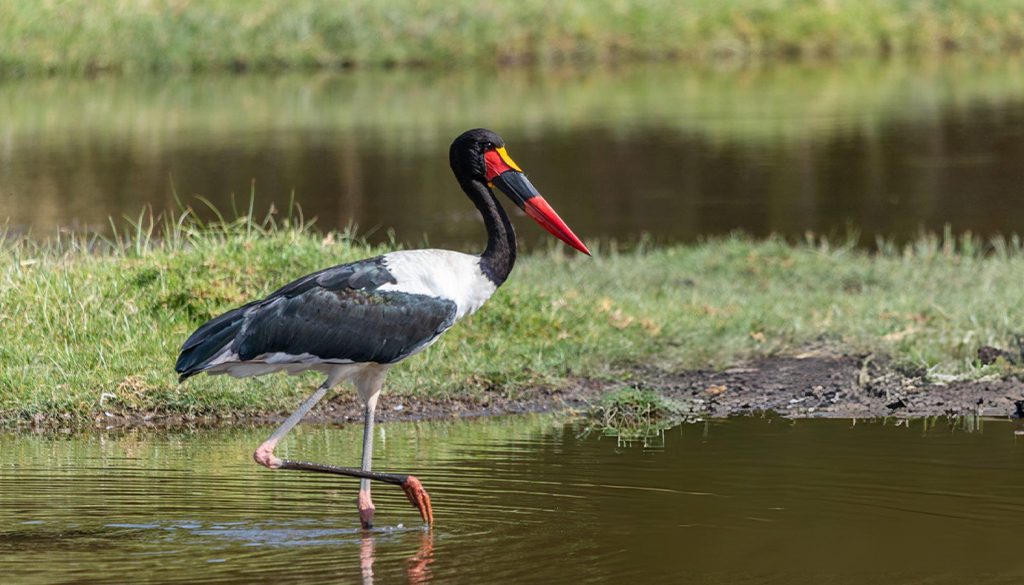
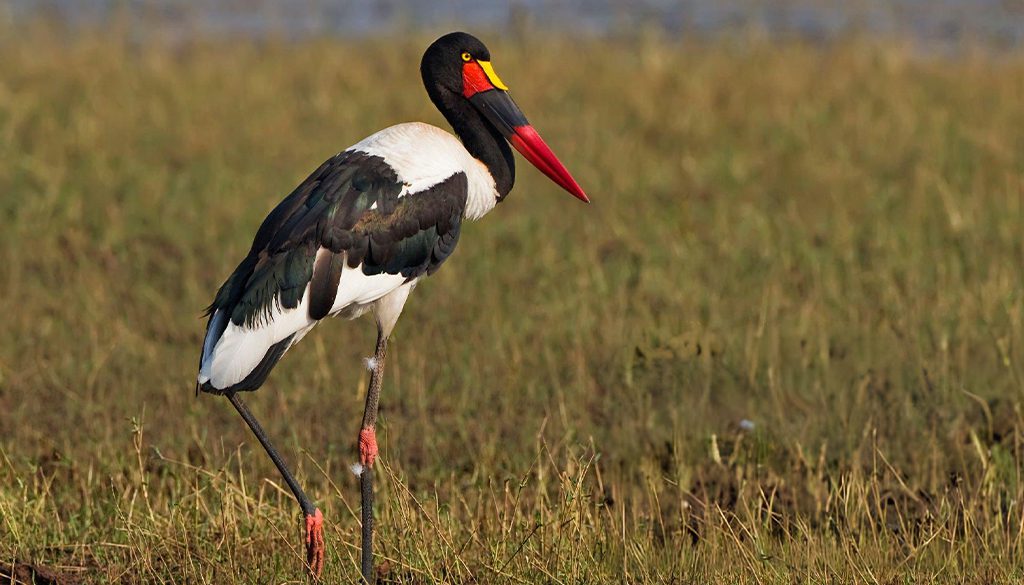
To see a Saddle-billed Stork in its natural habitat is to witness an incredible display of natural design. Its appearance is striking, almost artistic. The bird features glossy, iridescent black feathers covering its head, neck, back, and wings, contrasted by a bright white belly and chest. But its most iconic feature—the one that gives the bird its name—is its remarkable bill. The beak is massive, sharp, and slightly upturned, colored in a vivid shade of crimson red with a bold black band running right across the middle. Right at the top of the bill, sitting directly between the eyes, is a bright yellow, saddle-like shield of skin known as a frontal caruncle. This yellow saddle creates a breathtaking contrast against the red and black beak, making the bird instantly recognizable even from hundreds of yards away. Adding to its unique aesthetic are its long, spindly legs, which are mostly dark grayish-black, broken up by bright yellow knee joints—a subtle touch of color that makes the bird look as though it is wearing high-fashion boots.
Physical Characteristics and Sexual Dimorphism
Interestingly, you can easily tell the difference between a male and a female Saddle-billed Stork if you look closely at their eyes. Males possess dark brown irises and feature two small yellow wattles hanging near the base of their beak. Females, on the other hand, lack these wattles but sport striking, brilliant yellow irises that pierce through the landscape.
Despite their massive height and eye-catching coloration, Saddle-billed Storks are remarkably gentle, deliberate, and solitary creatures. Unlike many other wading birds that gather in massive, noisy colonies, Saddle-billed Storks are solitary hunters or travel in quiet, devoted pairs. They are strictly monogamous, often mating for life and establishing large, permanent territories along rivers, lakes, flooded plains, and marshes across tropical Africa.
Masterful Hunting Techniques in Tropical Wetlands
Watching a Saddle-billed Stork hunt is a masterclass in patience and precision. Standing high above the reed beds on its slender legs, the bird freezes, turning into a motionless statue. It waits patiently for fish, frogs, crabs, or small reptiles to move through the shallow waters below. Once prey comes within striking distance, the stork lunges forward with lightning speed, plunging its massive bill into the water to impale or grip its catch. Because of their sheer size, they are formidable predators in their wetland ecosystems, capable of swallowing surprisingly large fish in a single gulp.
When it comes to communication, the Saddle-billed Stork is a bird of silence. Like most storks, it lacks a fully developed vocal organ, meaning it cannot sing or call out like songbirds do. Instead, it relies on visual displays and mechanical sounds. To communicate with its mate, especially during courtship or when defending its nest, the Saddle-billed Stork performs elaborate bill-clattering rituals. By rapidly snapping its upper and lower beak together, it creates a loud, rhythmic sound that echoes across the quiet wetlands, signaling its presence and reinforcing its pair bond.
Nesting, Breeding, and Family Life
Building a home is no small feat for a bird of this scale. Saddle-billed Storks construct enormous, flat nests made of sticks, twigs, and reeds high up in the forks of tall trees or atop isolated palms. These nests are built to last and are reused year after year, with both parents contributing to their maintenance. The female typically lays one to three large white eggs, and both the mother and father take turns incubating them over the course of a month. Once the chicks hatch, both parents share the demanding duty of feeding their offspring, making countless trips back and forth to supply the growing nestlings with fresh fish and water.
While they are not currently classified as globally endangered, their populations are thinly spread out because each pair requires a vast area of wetland to survive. Protecting Africa’s pristine floodplains and marsh ecosystems is essential to ensuring that the tallest stork in the world continues to have a place to roam.
Ecological Importance and Conservation Challenges
As an apex avian predator in its aquatic habitat, this magnificent creature plays a critical role in maintaining balanced wetland ecosystems. By keeping populations of fish, amphibians, and aquatic reptiles in check, the Saddle-billed stork helps foster biodiversity across African river systems. However, environmental degradation, human encroachment, and the draining of natural wetlands pose serious long-term threats to their survival.
Because these storks require expansive, undisturbed territories to breed and feed effectively, localized habitat loss can severely impact their numbers. Conservation efforts focused on protecting primary river basins, protecting nesting trees, and managing freshwater resources are vital. Raising international awareness about this avian icon helps ensure that future generations will still be able to admire the magnificent height, brilliant colors, and regal presence of Africa’s towering avian giant.
Help Me Plan My Trip
GET IN TOUCH
To contact an expert travel planner to start planning your adventure in Kenya, click the button below: