Dhole vs African Wild Dog – Can You Tell Them Apart?
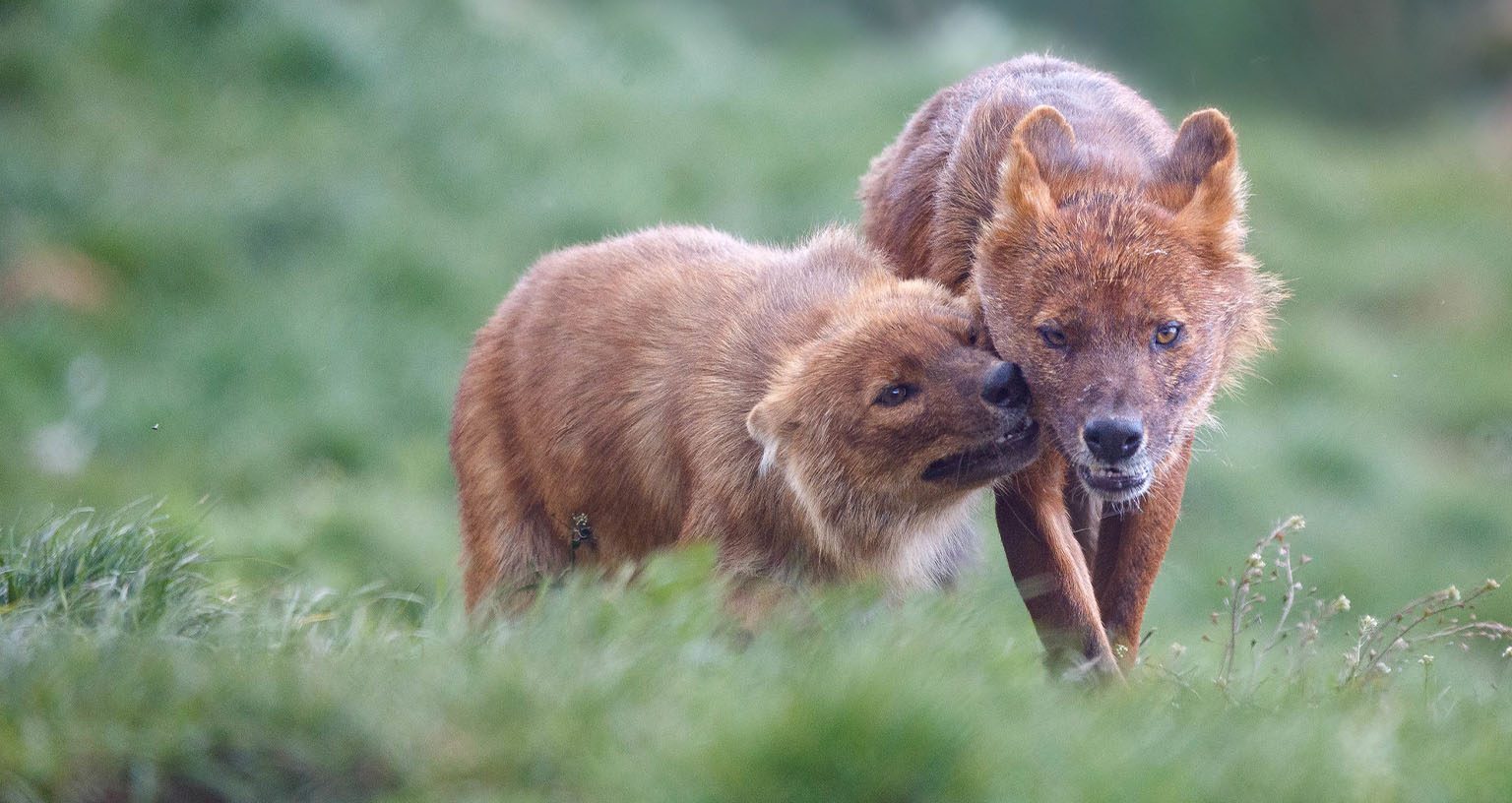
The dhole and the wild dog, also known as the African wild dog or painted dog, are two distinct species of canids with notable differences in their appearance, habitat, behavior, and geographical distribution.
Let’s start with their physical characteristics. Dholes (Cuon alpinus) are native to parts of Asia, including countries like India, China, and Southeast Asian regions. They are slightly smaller than wild dogs, measuring around 3 feet (90 cm) in length and weighing between 22 to 55 pounds (10 to 25 kg). Dholes have a reddish or yellowish-brown coat with white markings on their chest, throat, and tail tip.
Wild dogs (Lycaon pictus), on the other hand, are primarily found in sub-Saharan Africa, including countries such as Botswana, Tanzania, and South Africa. They are slightly larger than dholes, measuring about 3.5 to 4.5 feet (105 to 135 cm) in length and weighing between 40 to 80 pounds (18 to 36 kg). Wild dogs have a unique and striking coat pattern, with mottled fur in black, brown, and white patches, providing individual variation.
In terms of social structure and behavior, dholes and wild dogs have notable differences. Dholes live in packs that can range from 5 to 40 individuals, with a dominant breeding pair leading the group. They exhibit strong family bonds and cooperative hunting behavior. Dholes communicate through various vocalizations, including whistles, screams, and growls, to coordinate their activities and maintain group cohesion.

Wild dogs, on the other hand, live in packs ranging from 6 to 20 individuals, although larger packs have been observed. These packs have a complex social hierarchy, with an alpha pair as the leaders. Unlike dholes, wild dogs have a more egalitarian approach to breeding, with both males and females in the pack participating in raising the young. Their social dynamics involve cooperative hunting and intricate communication through vocalizations, body postures, and facial expressions.
When it comes to hunting behavior, dholes and wild dogs employ different strategies. Dholes are opportunistic hunters that primarily target medium-sized ungulates such as deer, wild boar, and smaller mammals. They use their keen senses, including excellent hearing and sharp vision, to locate prey and coordinate their attacks. Dholes are known for their stamina, persistence, and ability to pursue prey over long distances.
Wild dogs, on the other hand, are specialized hunters that excel in endurance running. They have exceptional stamina, capable of maintaining high speeds over long distances. Wild dogs primarily hunt in coordinated packs, using their teamwork and strategy to exhaust and outmaneuver their prey, which includes antelope, gazelles, and other herbivores.
Overall, while dholes and wild dogs belong to the Canid family, they have distinct physical characteristics, social structures, hunting behaviors, and geographic ranges. Appreciating these differences allows us to understand the fascinating diversity of the animal kingdom and the unique adaptations that enable different species to thrive in their specific habitats.
GET IN TOUCH
To contact an expert travel planner to start planning your adventure in Kenya, click the button below: