Are Warthogs Friendly or Dangerous?
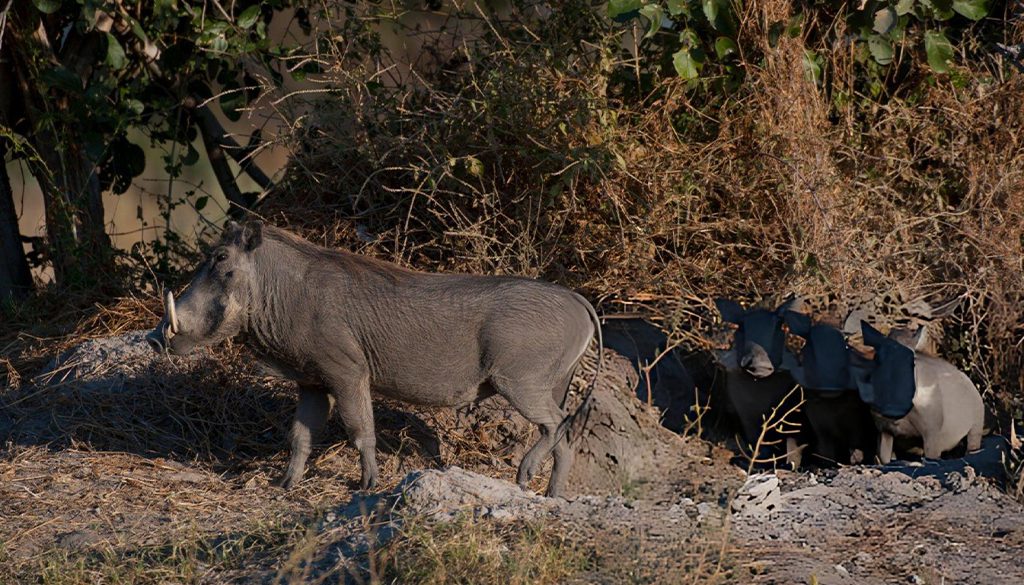
Are warthogs friendly? The short and honest answer is no; they are not friendly in the sense of a family golden retriever or a hand-reared farm pig. They are strictly wild animals driven by survival, instinct, and a healthy dose of suspicion toward anything larger than themselves. However, the complete answer is a bit more nuanced and far more fascinating. While they certainly will not trot up to you looking for a chin scratch, they are not inherently aggressive monsters either. In fact, compared to their notoriously hot-headed cousins like the Eurasian wild boar, warthogs are remarkably skittish, surprisingly gentle within their own family groups, and generally prefer running away at full speed over picking a fight with a human.
When exploring if warthogs are friendly, it helps to look closely at how these fascinating creatures balance survival instincts with surprisingly social, cooperative behaviors in the African wild.
1. The Tail-Up Escape Response
When startled, warthogs perform one of the most comical escapes in the animal kingdom. Rather than standing their ground or aggressive confrontation, they instantly turn and trot off in the opposite direction.
As a warthog runs, its thin tail shoots straight up into the air like an antenna, topped with a little tuft of hair. This behavior is not just a quirky habit; it acts as a signaling flare for the rest of the family unit. When evaluating whether warthogs are friendly to one another, this movement allows piglets and companions to follow through tall grasses without getting separated during a hasty retreat.
2. Defensive Power and Sharp Tusks
If they find themselves backed into a corner, trapped, or forced to defend their young, their entire demeanor changes in a split second. A cornered warthog transforms from a nervous runner into a razor-sharp powerhouse.
Their primary weapons are their lower tusks, which continuously rub against the upper tusks to create edges sharp enough to slice through heavy hide and flesh. A defensive strike from an adult can inflict severe, life-threatening wounds on a predator like a leopard or lion. So while asking are warthogs friendly usually reveals a peaceful flight response, mistaking their flight for weakness is a dangerous mistake.

3. Affectionate Social Circles
Where you will see a softer side of the warthog is within their immediate family dynamics. Among themselves, warthogs display a surprising degree of affection, cooperation, and community spirit.
-
Group Living: Female warthogs, known as sows, live in close-knit family units called sounders with their offspring.
-
Mutual Grooming: Members of the sounder groom one another regularly to strengthen bonds and remove parasites.
-
Shared Warmth: They sleep huddled tightly together for warmth inside underground burrows, often repurposed aardvark dens.
-
Maternal Care: Mothers are exceptionally protective, often kneeling down on their front wrists to graze so they can stay eye-to-eye with their tiny offspring.
4. Cooperative Foster Nursing
In addition to close bonds, sow warthogs demonstrate remarkable empathy within sounders. Mothers have been observed engaging in alloparenting or cooperative nursing. If a mother dies or becomes unable to feed her litters, other sows will foster and nurse piglets that are not originally their own. This high level of social cohesion proves that while asking are warthogs friendly toward humans yields a negative answer, their friendliness toward their own kind is exceptionally strong.

5. Symbiotic Relationships with Other Species
They also form unexpected, almost comical bonds with entirely different species in the wild. One of the most famous examples of this is their relationship with the banded mongoose. In wildlife reserves across Africa, warthogs have learned to lie down flat on the ground, completely relaxed, allowing packs of mongooses to clamber all over their bodies. The mongooses pick off ticks, fleas, and parasites from the hide, enjoying a nutritious meal while giving the warthog a full-body spa treatment. This cooperative behavior demonstrates that warthogs are fully capable of peaceful, symbiotic interactions when mutual benefits and safety are established.
6. Human Interactions and Habituation Dangers
Human interactions with warthogs usually fall into two distinct categories depending on the environment: wild encounters and habituated settings. When people feed warthogs, which is strongly discouraged by wildlife authorities, warthogs quickly learn to associate humans with easy meals. In these settings, they may appear remarkably tame, wandering through lodge grounds, grazing on manicured lawns, and letting people approach relatively close.
7. The Illusion of Tameness
This apparent friendliness is an illusion. A habituated warthog remains a wild animal driven by survival instincts. If someone startles a feeding animal, gets between a mother and her piglets, or attempts to pet one, the warthog can instantly revert to defensive instincts.
Asking whether warthogs are friendly in these moments quickly leads to a dangerous reality check, as a single rapid tusk swipe or bite can cause severe injury.
Help Me Plan My Trip
GET IN TOUCH
To contact an expert travel planner to start planning your adventure in Kenya, click the button below: