Why Don’t Preys Respond Fearfully to Hyenas?
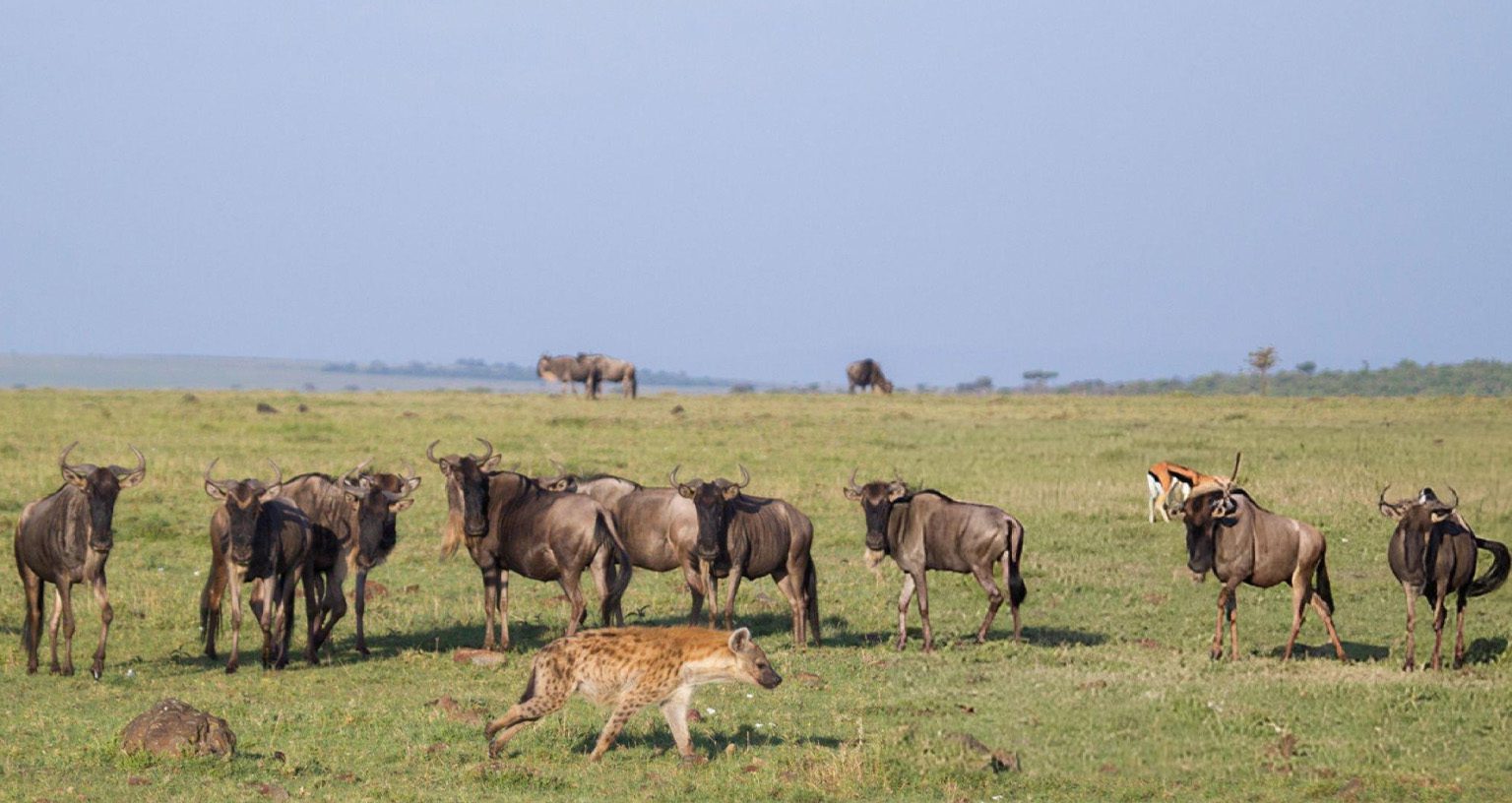
Why don’t preys respond fearfully to hyenas? The answer lies in a complex web of evolutionary learning, ecological roles, behavioral cues, and risk assessment. Hyenas are not always seen as immediate threats due to their opportunistic hunting style, social behavior, and the familiarity they have within the ecosystem.
Prey animals are far from oblivious; they’re highly adaptive and constantly assessing their environment. When a hyena is just wandering by, not hunting, or simply looking for leftovers, running away may not be the wisest choice. In the wild, every movement matters—energy must be conserved, attention must be precise, and fear must be warranted.
Misunderstood Predators
To understand why prey animals sometimes seem unbothered by the presence of hyenas, it’s important to first reframe our perception of the hyena. Pop culture often portrays them as cowardly scavengers, but hyenas are intelligent and efficient hunters. The spotted hyena, for example, has one of the strongest bite forces in the animal kingdom and lives in complex, matriarchal societies.
Despite their hunting prowess, hyenas are still overshadowed by more glamorous predators like lions and cheetahs. This human bias might make us more likely to expect prey to react to hyenas the same way they would to other predators. But prey animals have their own set of instincts and evolutionary experiences that shape their behavior, which doesn’t always match our assumptions.
Predator Recognition in the Animal Kingdom
Prey animals have evolved to recognize threats through a combination of visual cues, sounds, and scents. They often exhibit heightened awareness around animals that pose a direct and immediate threat. This includes not just identifying a predator but assessing whether it is currently hunting or not.
Interestingly, hyenas are not always perceived as an immediate threat. They are opportunistic hunters and scavengers, meaning they don’t always pose the same consistent danger as a stalking lion. Prey animals can sometimes “read” the hyena’s behavior—whether it’s casually roaming, eating, or showing hunting signals—and choose to ignore it if it doesn’t pose a clear and present danger.
Group Behavior and Safety in Numbers
Another factor in this complex equation is the behavior of prey species in groups. Animals like wildebeests, zebras, or impalas often move in herds, and group dynamics heavily influence individual responses to predators.
When a lion enters a scene, its stealth and solitary hunting behavior often trigger alarm and panic. Hyenas, on the other hand, are more social and may appear openly and in groups, which could desensitize prey animals to their presence. Herd animals are less likely to run from a group of hyenas unless they start exhibiting hunting behaviors.
Additionally, a single hyena poses far less risk to adult prey than a lion or cheetah. It usually takes a coordinated effort by several hyenas to bring down large prey, so a lone hyena may not trigger the same flight response, especially in larger or more confident herd animals.
Evolutionary Conditioning and Familiarity
Prey animals evolve in ecosystems where they repeatedly encounter the same predators. Over time, they learn to distinguish between types of threats and calibrate their responses. Hyenas often scavenge rather than hunt, and this behavior is well understood by prey species. If a hyena is merely following a lion kill to scavenge, prey animals may not see a need to flee.
Moreover, in regions where hyenas are prevalent but rarely hunt large prey, the local animal population may grow accustomed to their presence. This “learned indifference” is not a sign of ignorance or dull instincts—it’s a survival mechanism that helps conserve energy. Running every time a predator is spotted would be exhausting and inefficient.
The Role of Body Language and Communication
Hyenas, like many animals, use body language to communicate. When they are in a relaxed state, with heads down, tails low, and mouths slightly open, they do not project a threatening presence. Prey animals have evolved to pick up on these subtle cues and adjust their behavior accordingly.
Only when hyenas start showing hunting behavior—tight group formations, focused attention, stealthy movements—do prey animals respond with fear and alertness. This nuanced understanding between predator and prey is a testament to the complexity of their shared environment.
Ecological Balance and Niche Roles
In the grand scheme of the savannah ecosystem, every predator and prey plays a role that contributes to the balance of life. Hyenas are essential to this balance, not just as hunters, but also as scavengers. Their role in consuming carcasses prevents the spread of disease and cleans the environment.
Because of this dual role, they are not perceived purely as killers. This gives them a somewhat “neutral” status in the eyes of many prey animals, at least until hunting behavior is detected. It’s a subtle but powerful distinction that affects how other animals behave around them.
Observational Bias and Human Interpretation
Another layer to consider is how humans interpret animal behavior. What might look like a lack of fear or reaction to us might actually be a form of passive vigilance. Prey animals might be carefully watching hyenas from a distance or using other members of their herd to gauge danger. Just because they’re not running doesn’t mean they’re not aware.
Furthermore, human presence during wildlife observation can sometimes alter animal behavior. Some animals may act differently when humans are nearby, or they might shift their attention from the predator to the observer, skewing what we perceive to be their natural reactions.
Plan My Trip
GET IN TOUCH
To contact an expert travel planner to start planning your adventure in Kenya, click the button below: