

Which Safari Sectors Offer the Best Wildebeest Crossings in the Masai Mara?
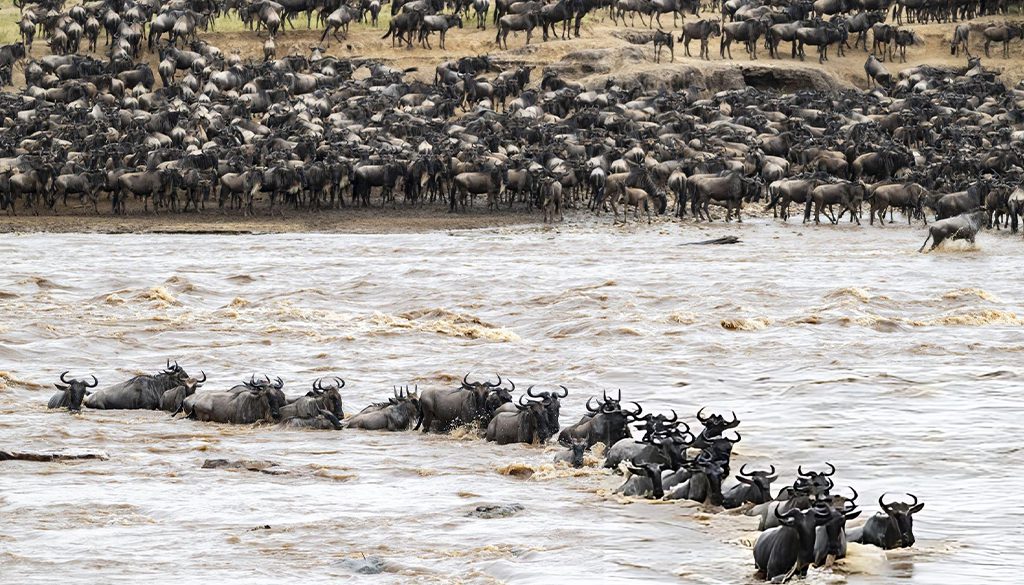
If you are looking for prime front-row seats to the drama of the best wildebeest crossings in the Masai Mara, look along the winding channels of the Mara and Sand Rivers. Key hotspots include Paradise Crossing, famous for its steep clay banks and heart-stopping crocodile encounters; Lookout Hill and Main Crossing, which offer expansive, panoramic viewpoints of huge herds; Makutano Point, where the Mara and Talek rivers meet to create chaotic double-river crossings; and the Sand River Crossing near the Tanzanian border, ideal for early-season arrivals.
Early Arrivals at the Sand River
Starting near the southern border of the reserve, where the herds first spill over from Tanzania’s Serengeti, lies the Sand River Crossing. This location comes alive early in the migration season, around late July. The Sand River is generally shallower and less daunting than the main Mara channel, featuring sweeping sandy beds flanked by open savanna. Because the water levels here are often lower, crossings at Sand River carry a distinct character. Herds stride across in massive, sprawling waves rather than single-file plunges, framing a breathtaking sight against the morning light. It serves as the dramatic opening chapter to the migration in Kenya, offering vast horizons and intimate wildlife encounters before the herds push deeper into the reserve.
Viewing these early wildebeest river crossings in the Masai Mara gives safari-goers an unhurried, intimate look at the beginning of the journey. As thousands of animals step into Kenya for the first time, the atmosphere is filled with anticipation. Photographers frequently favor this spot because the soft morning dust and lower water banks allow for exceptionally crisp reflections and panoramic shots across the border country.

The Heart of the Action at Main Crossing
Moving further north along the primary Mara River channel, you encounter the famous Main Crossing point near the Serena sector. This is often considered the heart of the migration viewing area due to its accessibility and high volume of animal traffic. The riverbanks here are wide, creating ideal vantage points for travelers hoping to spot herds gathering by the thousands. Long before a single animal enters the water, the tension builds at Main Crossing. Hundreds of wildebeest push against each other, dust rising into the air as instincts clash with fear. When one brave individual finally takes the leap, a thunderous chain reaction follows, turning the quiet riverbank into an overwhelming cascade of plunging hooves and splashed water.
Because of its central positioning, Main Crossing remains one of the most reliable places to witness wildebeest river crossings in the Masai Mara throughout August and September. Safari vehicles often wait patiently along the perimeter as lead animals test the currents. The explosive energy when the herd breaks containment is an unforgettable spectacle that captures the sheer raw momentum of African wildlife.
High-Octane Survival at Paradise Crossing
For those seeking sheer theatrical drama and iconic wildlife photography, Paradise Crossing is unparalleled. Known for its steep, golden clay banks, this site forces the herds to slide and leap down sheer drops directly into deep water. The gradient makes ascending the opposite side equally challenging, leading to chaotic scrambles that test every animal’s strength. Paradise Crossing is notorious for its concentration of massive Nile crocodiles, who wait in the dark eddies of the current for the herd to enter. The sheer drop-offs, the churn of muddy water, and the constant threat lurking just beneath the surface make Paradise Crossing the definitive spot for high-octane survival action.
The physical terrain here creates dramatic choke points. As animals scramble up slippery clay walls, many fall back into the churning river, prolonging the spectacle and increasing the tension. For nature photographers, the contrast between the lush riverine greenery, the orange clay, and the splashing river current provides an unmatched composition during peak wildebeest river crossings in the Masai Mara.

Double River Hazards at Makutano Point
Equally intense is Makutano Point, located where the Mara and Talek rivers converge. In the local Swahili language, Makutano means the meeting place, and it lives up to its name in extraordinary ways. Because two rivers join here, the currents create complex swirling eddies and unpredictable deep spots. Herds that cross here often find themselves forced into what safari guides call a double crossing, navigating one channel only to immediately face a second river barrier. The confusion at Makutano can trap thousands of animals on small strips of land between the streams, leading to intense herd dynamics and unmatched opportunities to watch raw animal instinct at work.
Navigating two merging river systems requires extreme resilience from the herds. Young calves often get separated in the swirling currents, while predators lurk along both shores waiting for exhausted animals. The resulting chaos at Makutano Point highlights the unpredictable nature of wildebeest river crossings in the Masai Mara, where a single wrong turn can re-route an entire herd into deeper waters.
Panoramic Vistas from Lookout Hill
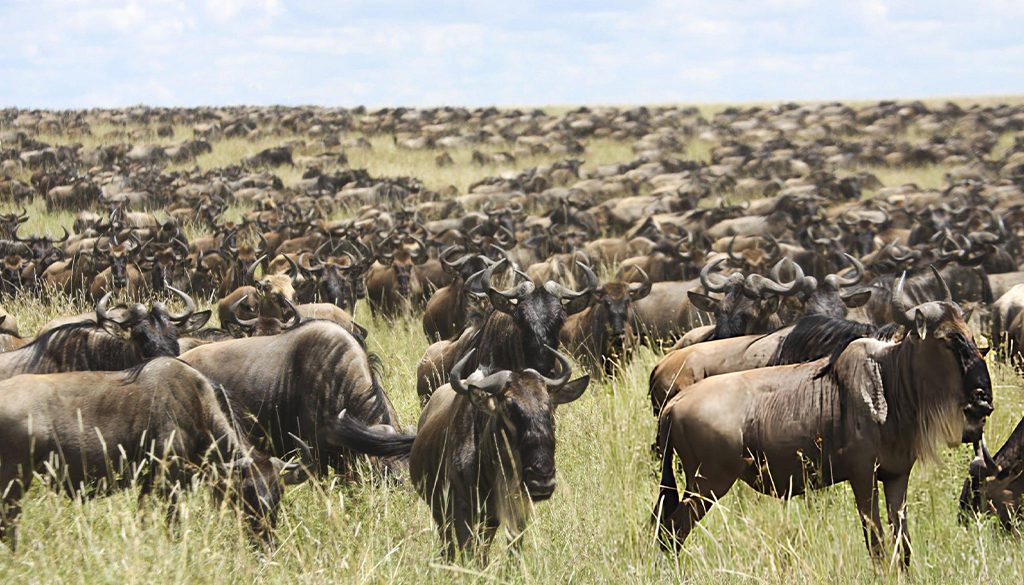
If your goal is to take in the sheer scale of the migration all at once, Lookout Hill offers an entirely different perspective. Perched on high ground overlooking the Mara Triangle, this elevated viewpoint lets you gaze out across miles of open plains and sweeping river bends. From Lookout Hill, you do not just watch a single riverbank; you see the entire landscape in motion. You can watch multiple dusty columns of wildebeest converging from miles away, tracking their movements as they decide which crossing point to approach. It provides a strategic, bird’s-eye view of the wilderness that brings the massive scale of the migration into breathtaking focus.
Standing atop Lookout Hill gives travelers a profound sense of geography. Rather than focusing solely on the splash of the river, you appreciate the vast network of trails carved into the grass by millions of hooves over generations. Watching wildebeest river crossings in the Masai Mara from this vantage point highlights how individual river decisions connect to the broader ecosystem movement across Kenya and Tanzania.
Quiet and Exclusive Northern Channels
Further along the river in the quieter northern stretches, locations like the Cul-de-sac and Ngiro-are crossings in the Mara Triangle offer an intimate alternative. These spots feature steep banks framed by dense riverine forest, creating a dramatic backdrop for smaller, highly concentrated crossings. Because vehicle access is carefully regulated in the Triangle and surrounding private conservancies, watching a river crossing here feels deeply personal. Without the noise of large crowds, you hear every splash, every call of a mother seeking her calf, and the quiet rustle of the surrounding acacia bush.
Experiencing wildebeest river crossings in the Masai Mara in these northern sectors offers an exclusive feel that contrasts with the larger spectator crowds down south. The dense forest canopy casts long shadows over the water, adding a moody, cinematic feel to every crossing attempt.
Planning Your Migration Safari
To make the most of your trip, timing and location selection are paramount. The migration is a dynamic, weather-dependent event, but key patterns help dictate where to stay:
-
July to August: Focus on the southern sectors near the Sand River and lower Mara channel as herds cross over from the Serengeti.
-
August to October: Target central locations like Main Crossing, Paradise Crossing, and Makutano Point for peak action.
-
October to November: Look toward northern Triangle crossings as herds begin grazing on high northern plains before returning south.
Working with an experienced local guide is essential. Guides understand herd body language, wind directions, and river conditions, allowing them to position your vehicle safely without spooking the animals before they leap into the river.
Help Me Plan My Trip
Don’t take our word for it
See what our clients have to say!


GET IN TOUCH
To contact an expert travel planner to start planning your adventure in Kenya, click the button below:


