

Is it better to see the Great Migration in the Serengeti or the Masai Mara?
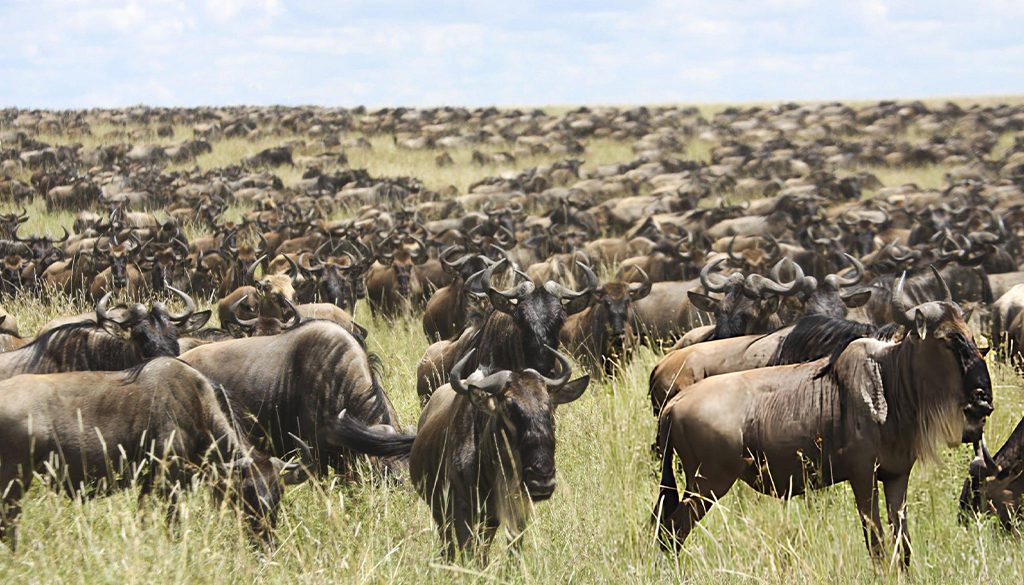
Is it better to see the Great Migration in the Serengeti or the Masai Mara? To answer the question right from the start: neither is strictly better, because both the Serengeti in Tanzania and the Masai Mara in Kenya are part of the exact same continuous ecosystem. Asking which one is superior is like asking whether the start of a masterpiece is better than its grand finale. The true answer depends entirely on when you plan to travel and what kind of spectacle you wish to witness.
If you dream of seeing the full, year-round cycle of life, the vast stage of the Serengeti takes center stage. Covering nearly fifteen thousand square kilometers, Tanzania’s Serengeti holds the herds for roughly nine months of the year. Between January and March, the migration settles in the southern plains. Here, during the calving season, hundreds of thousands of wildebeest calves are born within a matter of weeks. It is an incredible time of creation, but also one of intense drama, as apex predators—lions, cheetahs, and leopards—pounce on the vulnerable young across wide, uninterrupted plains. As the rains cease and the soil dries around May and June, the herds begin their trek northward, staging dramatic river crossings across the treacherous Grumeti River before advancing toward the north. For travelers seeking vast wilderness, solitude, and immersive journeys that span several days, the boundless horizon of the Serengeti is unmatched.

Safari Costs and Logistics
Planning a journey to either reserve involves distinct logistical considerations and price structures:
-
Travel Infrastructure:
-
Masai Mara: Easily accessible via quick domestic flights from Nairobi’s Wilson Airport (NBO) or an accessible road transfer.
-
Serengeti: Typically accessed via Kilimanjaro International Airport (JRO) followed by internal bush flights or longer overland drives through the Ngorongoro Conservation Area.
-
-
Park Fees and Budgets:
-
Kenya’s conservation fees for non-residents in the Masai Mara fall in higher daily price brackets during peak season, but accommodation options range widely from budget tented camps to ultra-luxury lodges.
-
Tanzania enforces strict park entrance, concession, and transit fees across the Serengeti circuit, making budget options slightly harder to find, though midrange and private luxury camps abound.
-
-
Cultural Encounters:
-
The Masai Mara provides seamless opportunities to visit authentic Maasai villages integrated around community conservancies.
-
The Serengeti borders diverse indigenous groups, including the Hadzabe and Datoga near Lake Eyasi, offering rich cultural additions to a wildlife itinerary.
-
However, if your vision of Africa involves high-octane drama packed into a shorter timeframe, Kenya’s Masai Mara shines brightest. Though much smaller in geographic size, the Masai Mara acts as a natural funnel during the peak dry season, usually between July and October. As the herds arrive in search of fresh green grazing, they encounter their greatest obstacle: the Mara River. This is the iconic scene featured in wildlife documentaries—thousands of panicking animals leaping down steep, muddy banks into churning waters filled with Nile crocodiles. Because the reserve is compact, the density of animals is astonishingly high. In the Mara, you are never far from the action, making it an exceptional choice for those on a tighter schedule who want rapid, unforgettable wildlife sightings.
Help Me Plan My Trip
Don’t take our word for it
See what our clients have to say!
]


