

How Do Antelopes Defend Themselves Against Lions?
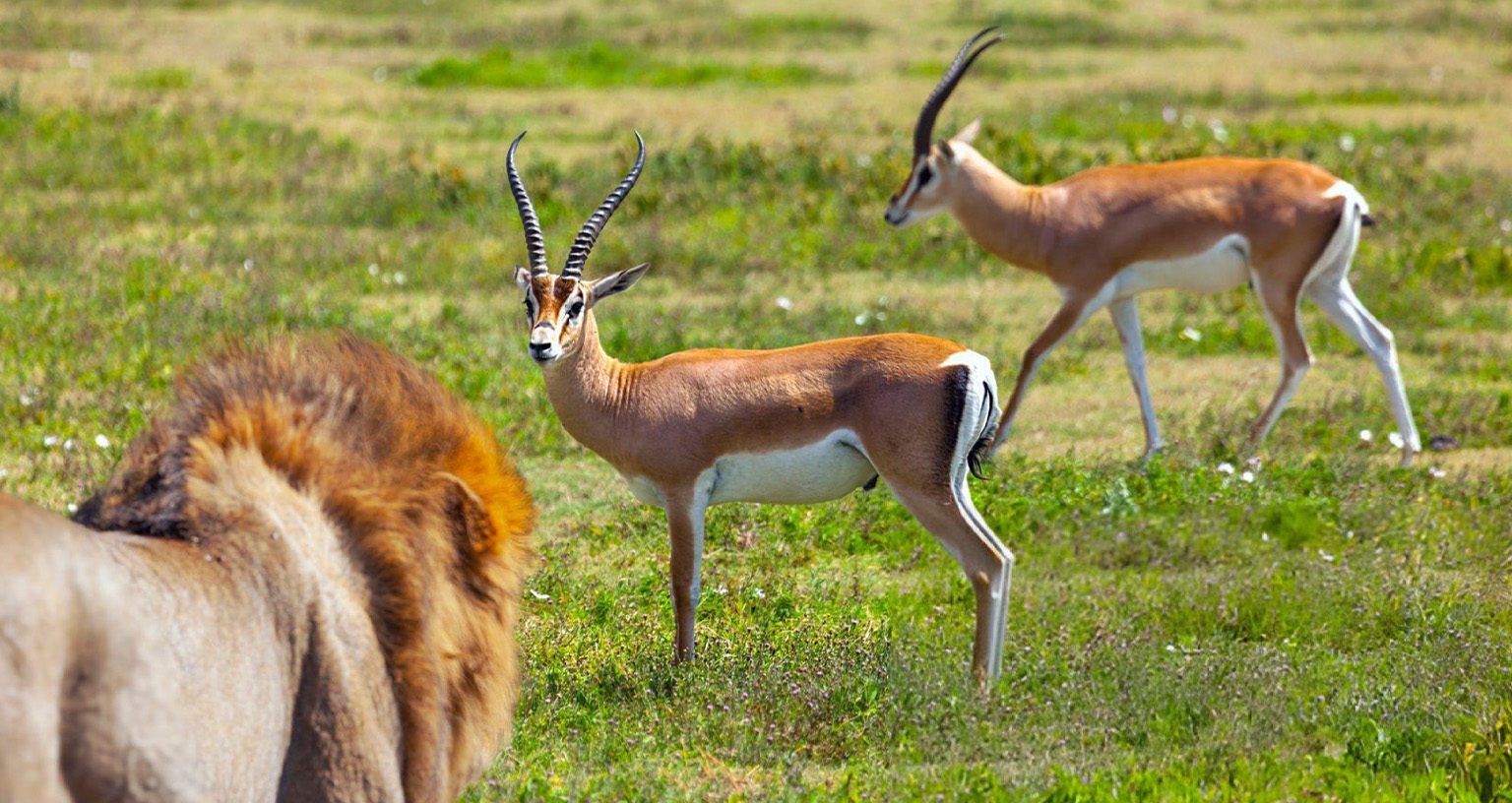
Antelopes defend themselves against lions through a combination of agility, speed, alertness, and herd behavior. In the vast plains of Africa where the predator-prey dynamic plays out daily, antelopes have evolved a remarkable set of survival tools to escape one of nature’s most fearsome predators: the lion. These graceful herbivores may not have the sharp claws or powerful jaws of their predators, but their defensive strategies are highly effective and refined through centuries of evolution.
This article explores the unique ways antelopes stay alive in the wild, including physical adaptations, behavioral responses, and how they leverage the environment to their advantage.
The Predator-Prey Dynamic: Lions vs. Antelopes
In the African savannah, lions are apex predators, relying on stealth, teamwork, and strength to bring down prey. Antelopes, on the other hand, are their common targets—especially species like the impala, gazelle, and wildebeest. Despite the odds, many antelopes live long enough to reproduce and thrive. This is largely due to the incredible defense mechanisms they possess.
Understanding how antelopes defend themselves against lions provides a glimpse into the evolutionary arms race between predator and prey. It’s not just about running fast—it’s about how, when, and why they move the way they do.
Speed: Their Greatest Asset
Speed is one of the most effective ways antelopes escape predators. Many species can run at speeds of 40 to 60 miles per hour. For example:
-
Thomson’s gazelles can reach up to 50 mph and have excellent endurance.
-
Impala can leap up to 10 feet high and cover distances of up to 30 feet in a single bound.
This explosive speed and leaping ability help them confuse and outrun lions. While lions are fast in short bursts (around 50 mph), they tire quickly. Antelopes exploit this by maintaining high speeds for longer distances.
Agility and Unpredictable Movement
Speed alone isn’t enough. Antelopes use zigzag running patterns, sudden stops, and unpredictable turns to throw off predators. These evasive maneuvers are incredibly effective against a lion’s linear sprinting pattern. Lions often struggle to adapt to these quick directional changes.
The element of unpredictability is key. A lion may be fast, but if it can’t predict the direction of its prey, its chances of a successful hunt drop significantly.
Heightened Senses and Vigilance
Antelopes have evolved keen senses of sight, hearing, and smell, which play a crucial role in early predator detection. Their wide-set eyes give them a broad field of vision, allowing them to scan for movement across the plains.
Many species also rely heavily on auditory cues. The slightest rustle or footstep can trigger alarm. In high-risk areas, antelopes will often freeze and listen before deciding whether to flee.
Being alert and aware is the first and most important line of defense. Lions typically rely on ambush tactics, creeping up close before initiating a chase. An antelope that spots the lion early has a much better chance of escape.
Strength in Numbers: Herd Behavior
Living in herds offers antelopes an evolutionary advantage. Group dynamics make it easier to:
-
Detect predators early (more eyes and ears)
-
Confuse predators during an attack (mass movement)
-
Protect the young and vulnerable by surrounding them
When lions attack, herds may scatter in all directions, making it difficult for the predator to focus on one target. This “confusion effect” significantly reduces the success rate of a lion’s hunt.
In some cases, individuals within a herd may also give alarm calls—distinctive sounds that signal danger and alert others to flee. This collective defense mechanism is an essential survival strategy.
Using Terrain and Environment
Antelopes are highly attuned to their environments and use natural features to their advantage. For instance, they often graze in open areas with good visibility to spot predators from a distance. In woodlands or areas with tall grass, they remain extra cautious and rely on constant movement to avoid ambush zones.
During escapes, antelopes may head toward rocky or uneven terrain, where their agility gives them an advantage over lions, who may struggle in such areas. Some species are also good swimmers and may cross rivers to avoid predators.
Social Signals and Communication
Subtle communication also helps antelopes defend themselves against lions. For example:
-
Tail flicks or raised rumps can signal that a lion has been spotted.
-
Some species will stare directly at predators to let them know they’ve been seen, discouraging the lion from launching an ambush.
-
Foot stomping or snorting is often used to alert the group without giving away their exact location.
These social signals play a huge role in early detection and group coordination during an attack.
Fake-Out Tactics: Stotting and Pronking
Certain antelope species, like springboks, engage in a behavior known as stotting or pronking—high, stiff-legged jumps into the air. While it may seem like wasted energy, this display serves two purposes:
-
It signals to the lion that the antelope is healthy and fast, not worth the effort of a chase.
-
It may act as a warning to others in the herd.
This bold behavior can deter predators before a chase even begins.
Evolving With the Threat
The way antelopes defend themselves against lions is not static. Over time, their behavior, speed, and group dynamics have evolved in direct response to predator behavior. As lions adapt, so do their prey. It’s a never-ending cycle of adaptation, showcasing the beauty of natural selection and survival.
For example, in areas where lion populations are high, antelope herds tend to be larger, more vigilant, and more likely to graze in open spaces. Where lions are absent or rare, these behaviors become less pronounced.
Plan My Trip
GET IN TOUCH
To contact an expert travel planner to start planning your adventure in Kenya, click the button below:


