

Are Water Buffalo Dangerous to Humans?

Are water buffalo dangerous to humans? The answer is a fascinating yes, though the threat level depends on whether you are dealing with a domesticated farm animal or a wild beast, and how you interact with it.
Many people frequently confuse Asian water buffaloes with Africa’s famous Cape buffalo. The Cape buffalo is widely known as the “Black Death” across the African continent. It is a completely wild species that has never been domesticated, holding a reputation for being one of the most unpredictable and aggressive animals on Earth. So, are water buffalo dangerous to humans in the same way? The true water buffalo originates in Asia and split into two separate paths thousands of years ago: the widely domesticated river and swamp buffaloes, and the rare, endangered wild water buffalo.
Gentle Giants of the Rural Homestead
For the vast majority of human interactions around the globe, people meet domesticated water buffaloes. Over thousands of years of farming alongside people, these animals have developed a surprisingly gentle temperament.
In many rural communities, a generational family will raise water buffaloes as essential members of the household. Passing down handling techniques through each generation ensures these large animals remain well-socialized. They provide draft power for agriculture, as well as nutrient-rich milk and meat. They are accustomed to being handled by adults and children alike, often forming close bonds with their caretakers.

Massive Physicality and Unintended Hazards
However, “docile” does not mean “harmless”. Even a well-trained domestic animal remains a massive powerhouse, often weighing between 1,000 and 2,200 pounds. When an animal of that magnitude feels stress, pain, or fear, the question of whether water buffalo are dangerous to humans takes on a much darker tone.
Fatality records and agricultural injury reports show that domestic buffaloes do injure and occasionally kill people each year. These incidents almost always occur under specific, high-stress conditions.
One primary trigger is maternal instinct. A mother buffalo with a newborn calf can become fiercely protective, viewing any stranger who gets too close as a direct threat. Another common danger zone involves breeding season. During this time, full-grown bulls experience heightened surge levels of hormones, making them irritable, territorial, and prone to violent outbursts if startled or handled improperly.
Transport and Handling Risks
Furthermore, handling these animals in tight quarters—such as loading them onto transport trucks or guiding them through narrow pens in abattoirs—poses a significant risk. If an animal panics, its sheer mass can cause severe crushing, trampling, or goring injuries without the animal ever intending to hunt or target a human maliciously.
When livestock handlers ask whether water buffalo are dangerous to humans in high-pressure agricultural environments, expert handlers always answer with caution. Even within a close-knit generational family that has raised livestock for decades, an unexpected move in a cramped pen can lead to severe physical trauma or crushed limbs.
Wild and Feral Counterparts
If domesticated livestock require caution, wild water buffaloes demand absolute distance and respect. Found in isolated protected pockets, true wild water buffaloes are a whole different story. When wildlife biologists evaluate whether water buffalo are dangerous to humans in nature, the verdict is overwhelmingly affirmative.
Standing significantly taller and heavier than their farm-raised cousins, wild water buffaloes carry massive, sweeping horns that can measure over six feet from tip to tip. In the wild, these animals face fierce natural predators like tigers and packs of dholes. Because they must constantly defend themselves and their young, wild populations have evolved an aggressive defense mechanism.
When cornered or surprised by a person on foot in dense brush, a wild buffalo will not hesitate to charge. Unlike many animals that execute “mock charges” to scare away threats, a charging wild buffalo usually follows through, using its heavy skull and razor-sharp horn tips to strike, toss, and trample its target.
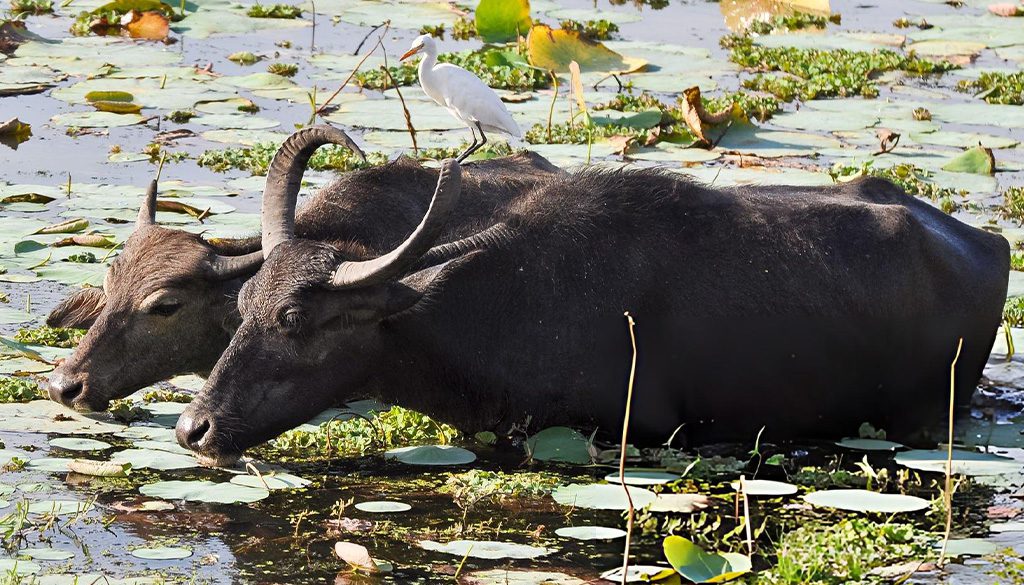
The Outback Dilemma: Feral Populations
In places like Northern Australia—where domestic buffaloes were introduced in the 19th century and eventually went feral—these wild herds have expanded rapidly. Feral buffaloes roaming the Australian Outback are considered dangerous wildlife, known to charge hikers, hunters, and vehicles if surprised or threatened.
For outdoor enthusiasts exploring remote Australian regions, wondering whether water buffalo are dangerous to humans is a vital safety issue. Feral bulls have no loyalty to humans and will aggressively defend their wallows and territory against intruders.
Recognizing Warning Signs and Body Language
Understanding animal behavior is the best way to prevent dangerous encounters. Whether working on a farm owned by a generational family or navigating areas with feral herds, recognizing warning signals can save lives:
-
Staring directly and raising the chin: Indicates alertness and suspicion.
-
Pawing the ground or stamping feet: A clear precursor to a physical charge.
-
Snorting loudly or blowing air through nostrils: Demonstrates agitation and high stress.
-
Turning side-on: A display designed to show off full body size and intimidate threats.
Help Me Plan My Trip
GET IN TOUCH
To contact an expert travel planner to start planning your adventure in Kenya, click the button below:


