

The Story Behind an Award-Winning Wildlife Photographs

Written by Johan Siggesson | Fine Art Photographer
Great wildlife photographs rarely happen by chance. While luck certainly plays a role, the images that stay with us are usually the result of an idea, careful planning, patience, and often a willingness to return to the same place again and again. They are created long before the shutter is pressed.
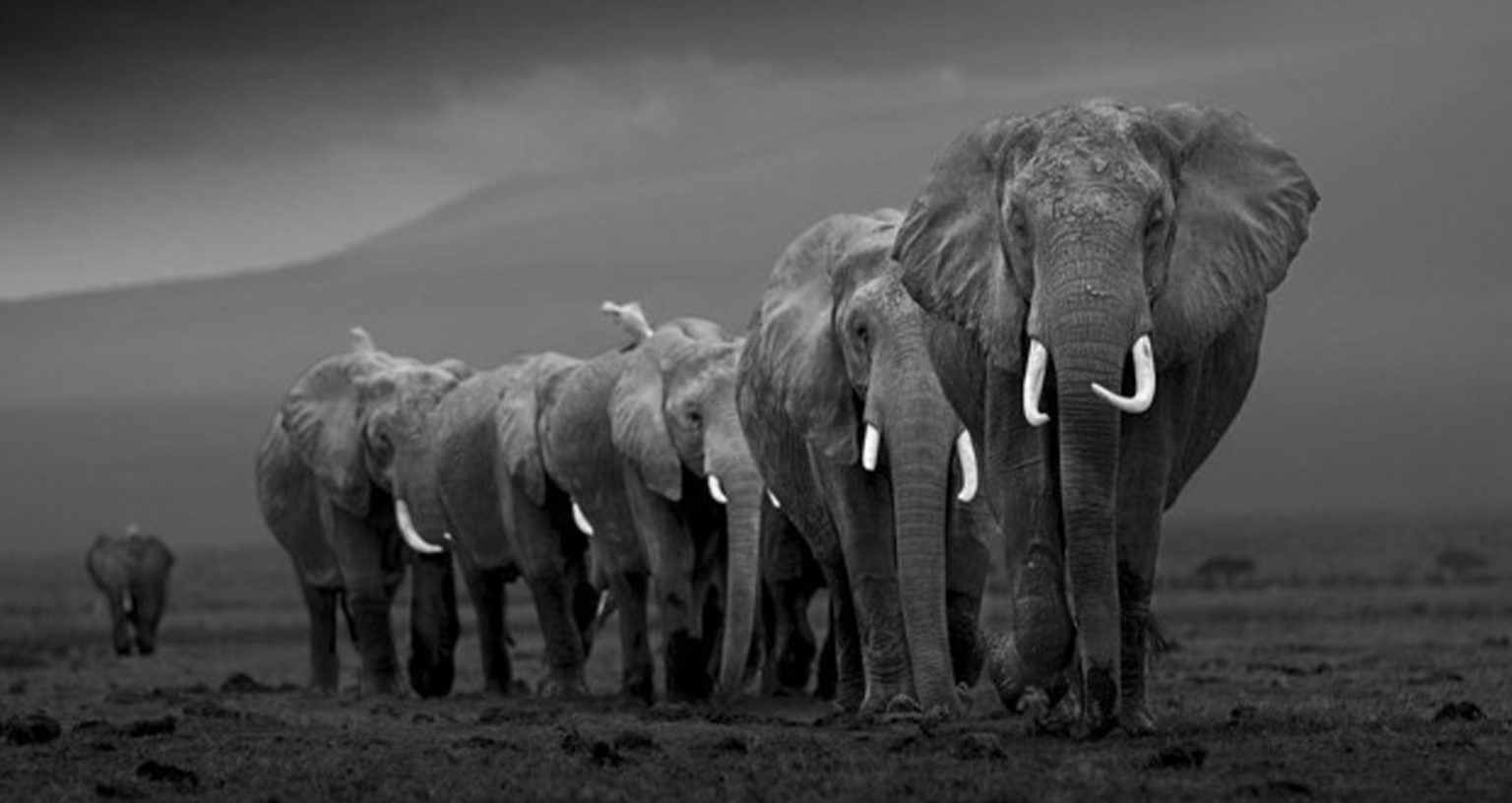
One photograph that perfectly illustrates this process is At the Foot of the Mountain, created in Amboseli National Park in southern Kenya. The image would later receive international recognition, but the awards are only the final chapter of a much longer story.
The photograph began with a simple vision. Rather than making a close portrait of an elephant, the goal was to capture the scale and unity of an entire family moving across the open plains. Amboseli is one of the few places in Africa where large elephant families roam freely against an expansive landscape, making it the ideal location for this idea.
Having a vision is only the first step. Wildlife does not follow a script, and no photographer can ask a family of elephants to walk into the perfect position. Instead, the process becomes one of observation.
For eight consecutive days, the same area was visited at the right time of day. The elephants were never chased or directed. They were simply observed. Each day revealed something new about how the families moved through the landscape, which routes they preferred, and how the matriarchs naturally guided the herd.
Most mornings looked promising at first. The light was beautiful, the family appeared on the horizon, and anticipation grew. But then one small detail would prevent the image from becoming the photograph that had been imagined. Sometimes the spacing between the elephants was too tight. Occasionally the background felt too busy, or the rhythm of the line was broken. None of these moments were failures. They were simply reminders that great wildlife photography is often about recognising when not to press the shutter.
One of the biggest lessons in wildlife photography is learning that every detail matters. A single elephant looking in the wrong direction can change the balance of an image. The position of a trunk, the overlap between two animals, or even a few extra steps can make the difference between an ordinary photograph and one that tells a stronger story.
Patience is often spoken about in wildlife photography, but patience alone is not enough. It must be combined with preparation. Returning to the same location repeatedly allows a photographer to understand the rhythm of both the landscape and the animals that live within it. That familiarity increases the chances of recognising the right moment when it finally arrives.
One of the things many people don’t realise is how many small details have to come together before a photograph like this becomes possible. At first glance, it may simply look like a family of elephants walking across the plains. In reality, every element of the scene mattered.
The leading elephant needed to have a strong set of tusks that immediately drew the eye. As it reached the ideal position, it also had to turn its body ever so slightly rather than walking perfectly side-on. At almost the same moment, it needed to lift and spread its ears, creating the classic elephant silhouette that photographers often hope for but rarely receive.
The background was equally important, without distracting bushes, trees or other animals breaking the clean lines of the composition. Even a single misplaced branch or an animal stepping into the wrong position could have weakened the image.
Distance also played a significant role. The photograph was intended to feel intimate while still showing the wider landscape. Since off-road driving is not permitted in Amboseli National Park, the opportunity could only happen if the family naturally chose to pass reasonably close to the road. That is something no photographer can control.
There was another factor entirely outside the photographer’s hands. Amboseli is one of Africa’s most popular national parks, and other visitors were often nearby. All it would have taken was one vehicle driving too close, making unnecessary noise or cutting across the elephants’ path for the family to change direction or quicken their pace. After days of waiting, the opportunity could have disappeared in an instant.
Perhaps that is what makes wildlife photography so rewarding. The final image is not the result of controlling nature, but of understanding it well enough to recognise the rare moments when everything comes together on its own.
On the eighth morning, everything came together.
The family emerged once again, following the matriarch across the plains. This time, the spacing between each elephant felt natural and balanced. Every individual contributed to the composition without distracting from it. For a few brief moments, the imagined photograph became reality.
Only a handful of frames were made before the moment passed.
There was one detail that gave me pause. One elephant was trailing some distance behind the rest of the family, creating a noticeable gap at the end of the line. My first reaction was that it spoiled the composition, and I seriously considered discarding the image because of it.
Looking at it later with fresh eyes, however, I realised the straggler actually added something important. It gave the family a sense of movement and depth, making the scene feel more natural and less perfectly arranged. In the end, what I had initially seen as a flaw became one of the details I appreciated most.
The resulting image, At the Foot of the Mountain, would go on to receive international awards and be exhibited as a large-format fine art print. Yet the recognition was never the true reward. The most valuable lesson came from the process itself.
Wildlife photography is often portrayed as being about fast reactions and expensive equipment. In reality, many memorable photographs are built on something much quieter. They begin with an idea, grow through careful observation, and are completed through patience, persistence, and respect for the animals being photographed.
Every safari offers remarkable wildlife encounters, but not every encounter becomes a lasting photograph. Sometimes the greatest skill is not pressing the shutter at the first opportunity. It is returning tomorrow, and the day after that, until preparation and nature briefly meet in perfect harmony.
That is the real story behind At the Foot of the Mountain. It is not simply a story about one award-winning photograph. It is a reminder that some of the most meaningful images are not found. They are earned through time, attention to detail, and an appreciation that nature always works on its own schedule.
GET IN TOUCH
To contact an expert travel planner to start planning your adventure in Kenya, click the button below:

